




Hair loss, or more medically recognised as alopecia, is a widespread affliction that has plagued millions of people worldwide and is characterised by the thinning or total loss of hair follicles on the area of the body where the hair is supposed to grow, most notably, the head. It may appear in many forms: hair loss on the crown or thinning hair line, patchy hair loss, or baldness. These are varied and factor in genetic tendencies (such as androgenetic alopecia, or pattern baldness), hormonal variation, dietary deficiency, stress, select drugs, auto-immune conditions, and scalp infections. Hair loss may considerably affect a person's self-worth and mental state. Hair loss therapies are numerous medical and cosmetic procedures to prevent or lessen the process of hair loss, promote the growth of new hair, and enhance the thickness and well-being of hair already present.
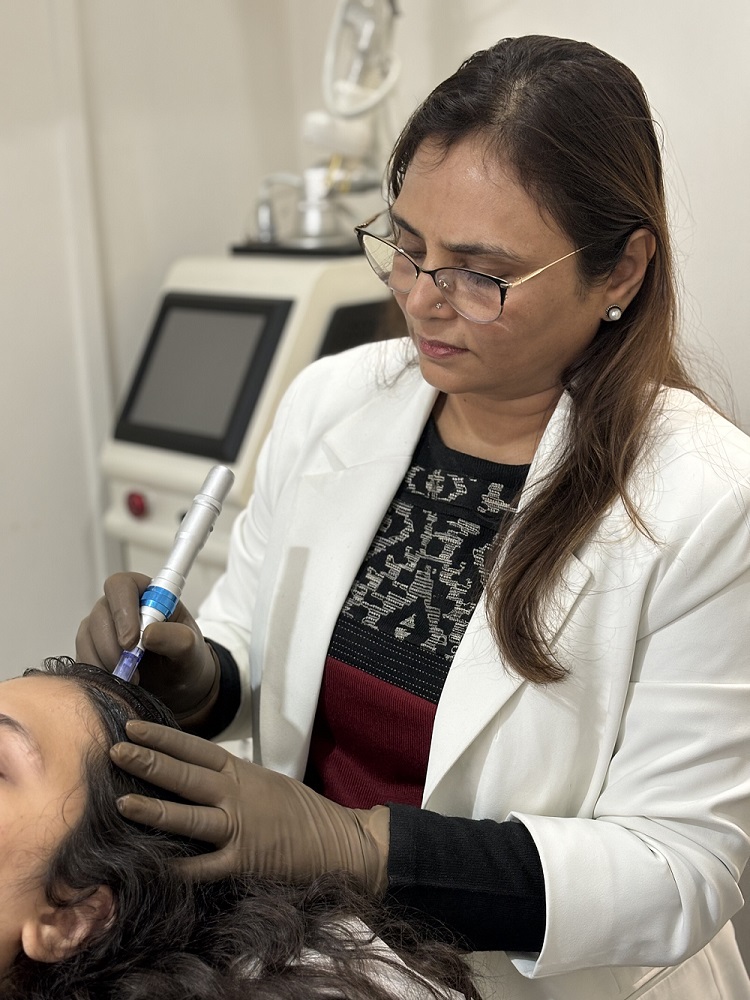
Dr. Sapna Bumb, MBBS, FFACC, holds a Fellowship in Facial Aesthetics and Clinical Cosmetology,

© 2025 All rights reserved